
There’s something satisfying about filling a glass straight from the kitchen faucet and actually enjoying the taste of the water. No awkward aftertaste, no unpleasant smell, and no need to dig around the refrigerator for another plastic bottle. It’s a small convenience, perhaps, but one that makes a difference throughout the day.
Modern drinking water systems give homeowners several ways to address specific water quality concerns while making treated water more accessible for drinking, cooking, and preparing beverages.
The challenge isn’t necessarily finding a filtration system. There are plenty available. It’s figuring out which one makes sense for your household without spending money on features you don’t really need.
Understanding your water supply is a pretty good place to begin.
Why Drinking Water Quality Deserves More Attention
Water can contain various naturally occurring minerals, dissolved substances, and suspended particles. Its characteristics depend on the original source, treatment processes, and the condition of the plumbing through which it travels.
Some households notice an unpleasant chlorine taste, while others experience metallic flavors or visible particles.
These differences don’t automatically mean the water is unsafe. Nevertheless, they can affect how much people enjoy drinking it.
More importantly, certain potentially harmful contaminants cannot be identified through taste, smell, or appearance alone.
Appropriate water testing helps homeowners understand what’s actually present in their supply. Municipal water customers can also review their supplier’s water quality reports.
Having reliable information makes choosing suitable filtration equipment considerably easier.
Treating Water Where You Need It Most
Not every household requires comprehensive filtration throughout the entire property. Sometimes, the main concern is simply the water used in the kitchen.
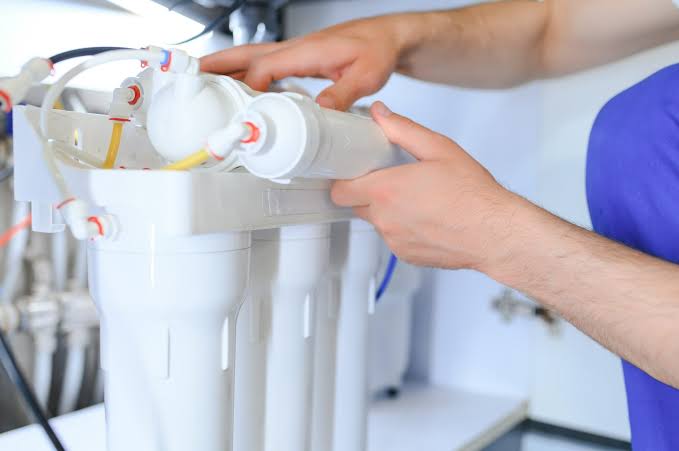
Installing point-of-use drinking water treatment allows homeowners to concentrate specialized filtration at a particular location, providing treated water for consumption without necessarily processing the entire household supply.
Under-sink filters, dedicated filtration faucets, and countertop units are familiar examples of this approach.
These arrangements can be particularly useful when water used for showering, laundry, and general cleaning doesn’t require the same treatment as drinking water.
Another advantage is flexibility. Homeowners can select equipment according to their available kitchen space, water consumption, and specific treatment requirements.
For many families, it’s a sensible balance between convenience and cost.
Making Filtered Water Part of Your Daily Routine
Think about how often you reach for water during an ordinary day. There’s the first glass in the morning, the afternoon cup of tea, and the water you use while preparing dinner.
Having conveniently accessible filtered water at home may encourage family members to refill reusable bottles rather than regularly purchasing packaged drinking water.
It can also make preparing meals and beverages more enjoyable when filtration addresses unwanted tastes or odors.
Consider something as simple as homemade soup. Water is a fundamental ingredient, yet its contribution to the finished flavor is often overlooked.
The same applies to coffee, tea, and other drinks.
Better-tasting water doesn’t need to be a luxury reserved for special occasions. With appropriate filtration, it can become an ordinary part of household life.
Choosing Between Carbon Filtration and Reverse Osmosis
Different filtration technologies serve different purposes, which is important to understand before purchasing equipment.
Activated carbon filters can reduce certain unwanted tastes, odors, and contaminants through adsorption. They’re often a practical choice for households primarily concerned about the taste of municipally supplied water.
Reverse osmosis works differently. It uses pressure and a specialized membrane to reduce various dissolved substances.
Depending on verified equipment performance, reverse osmosis may address contaminants that ordinary carbon filtration cannot effectively reduce.
However, membrane-based systems typically require more installation considerations and produce a reject water stream.
Neither approach is automatically better for every household.
The right choice depends on water testing results, treatment objectives, available space, and anticipated operating expenses.
Finding a Filtration System That Fits Your Kitchen
A filtration system should make life easier, not create another inconvenience.
Under-sink equipment is appealing because it keeps most components out of sight. Countertop systems may offer greater flexibility for people who prefer less extensive plumbing modifications.
Households with substantial drinking water consumption should also consider production capacity and delivery flow.
Nobody wants to spend several minutes waiting to fill a cooking pot when dinner is already running behind schedule.
Before purchasing equipment, check installation requirements and maintenance accessibility.
It’s also worth asking whether replacement cartridges are readily available. An affordable system can become surprisingly expensive if its replacement components are difficult to obtain.
Why Regular Filter Maintenance Matters
Water filtration equipment doesn’t remain effective indefinitely.
Carbon media gradually lose treatment capacity, sediment cartridges accumulate particles, and reverse osmosis membranes require periodic replacement.
Following manufacturer maintenance recommendations helps preserve treatment performance and suitable water flow.
Keep track of filter replacement dates rather than relying exclusively on changes in water taste or appearance.
If treatment is intended to reduce potentially harmful contaminants, appropriate follow-up testing is especially important.
Remember that filtration alone doesn’t automatically make an unsafe water source suitable for drinking.
Private well owners, in particular, should arrange relevant laboratory testing and select treatment according to the results.
A little routine attention can help ensure your investment continues delivering its intended benefits.
Good Water Should Be an Everyday Convenience
Improving your drinking water doesn’t necessarily require complicated equipment or a substantial household investment.
Start with reliable information, compare treatment technologies according to their verified capabilities, and choose a system that suits your lifestyle.
With suitable filtration and consistent maintenance, enjoying better-tasting water can become one of those simple household conveniences you genuinely appreciate.
After all, sometimes the smallest improvements make the most lasting impression on everyday life.
