Most people don’t think much about their water until something changes. Perhaps the showerhead starts collecting white deposits, the kettle needs descaling more often, or the dishes come out of the dishwasher with cloudy spots. These things seem minor at first. You wipe the faucet, clean the kettle, and get on with your day. But when the same problems keep returning, it’s worth asking whether the water itself is part of the issue.
Water naturally contains minerals and other dissolved substances picked up as it travels through the ground or moves through a treatment and distribution system. Many are harmless at normal levels, yet some can affect cleaning, household equipment, and the general experience of using water every day. Understanding what’s in your water can help you make sensible decisions without spending money on equipment you may not need.
Understanding the Minerals in Your Water
One of the most common water-related concerns is hardness. It occurs when water contains relatively high concentrations of certain dissolved minerals, particularly calcium and magnesium. These minerals often enter groundwater as it moves through limestone and other mineral-rich rock formations.
Hard water isn’t automatically unsafe to drink. Calcium and magnesium are naturally occurring minerals, and their presence is not generally considered a health concern at typical drinking-water concentrations. The trouble tends to show up in practical ways around the house.
Soap may not lather as easily, and mineral residue can remain on sinks, shower doors, and glassware. Some people also notice that laundry feels rougher or that their cleaning routine requires more effort than it used to.
The level of hardness matters. A household with moderately hard water may experience only occasional spots, while a property with very hard water could deal with persistent deposits and more frequent maintenance. Since water conditions vary by location and source, testing is a better starting point than relying on a neighbor’s experience or guessing from visible stains.
What Happens When Minerals Build Up?
When hard water evaporates, the dissolved minerals can remain on surfaces. This explains why a faucet sometimes looks clean immediately after wiping but develops white marks again after a few uses. The same thing can happen inside kettles, coffee machines, showerheads, and other equipment that regularly comes into contact with water.
Heat can encourage mineral deposits to form inside water heaters and other components. Over time, these deposits may interfere with heat transfer or restrict the flow of water through certain parts. The impact depends on the water chemistry, the amount of buildup, and the design of the equipment.
Not every deposit is caused by hardness, though. Reddish stains might be associated with iron, while dark residue or unusual odors can have different causes. Treating every water problem as a hardness issue can lead to wasted time and money.
If you notice recurring deposits in several rooms, or if equipment seems to need descaling more often than expected, consider having the water tested. Knowing the cause makes it much easier to choose an appropriate solution.
Protecting Your Plumbing Over Time
Your home’s pipes work quietly in the background, carrying water to bathrooms, kitchens, laundry areas, and outdoor taps. Because most of this network is hidden, it’s easy to forget that water chemistry can influence some components over time.
Mineral scale may accumulate inside certain pipes, valves, and fixtures, particularly where water is heated or flow conditions encourage deposits. Significant buildup can restrict flow in affected components, although the extent of the problem depends on several factors. Hardness alone doesn’t explain every plumbing issue, and low water pressure can have many other causes.
Maintaining plumbing starts with paying attention to changes rather than assuming every problem is normal wear and tear. A faucet that repeatedly becomes clogged with deposits, for instance, may need cleaning or inspection. If several fixtures experience reduced flow, a qualified plumber can help identify whether the cause is localized, related to the supply, or connected to another part of the system.
Water treatment may help reduce future scale formation when hardness is the underlying concern. However, treatment equipment cannot automatically repair existing pipe damage or clear every blockage. If buildup is already severe, professional inspection may still be necessary.
Why Household Appliances Deserve Attention
Many household devices depend on a steady supply of water to do their jobs properly. Dishwashers, washing machines, kettles, coffee makers, and water heaters all have different operating requirements, but mineral deposits can affect some of them.
A kettle is a familiar example. A chalky layer may form around its heating element, making it look unpleasant and requiring regular descaling. Coffee machines can develop similar deposits, which may affect their performance if maintenance is neglected.
Hard water can also leave spots on dishes and glassware. The problem may not mean the dishwasher is failing; its settings, detergent, rinse aid, and incoming water hardness can all influence the result.
Taking care of appliances involves following the manufacturer’s maintenance recommendations and using cleaning products suitable for each device. Some machines include water-hardness settings or built-in descaling reminders. Checking the manual can save you from unnecessary repairs and help you avoid using chemicals that might damage internal components.
If a device begins making unusual noises, leaking, or operating differently, don’t automatically blame the water. Arrange an inspection when needed, particularly if the issue affects electrical components or water connections.
Choosing a Suitable Water Treatment System
When hard water becomes a persistent nuisance, a water softener may be worth considering. Conventional salt-based softeners use ion exchange to reduce calcium and magnesium. As water passes through a resin bed, hardness minerals are exchanged for sodium or potassium ions. The resin is periodically regenerated so it can continue treating water.
A softener can help reduce mineral deposits, improve soap performance, and make some cleaning tasks easier. However, it doesn’t remove every possible contaminant, and it should not be viewed as a complete drinking-water purification system.
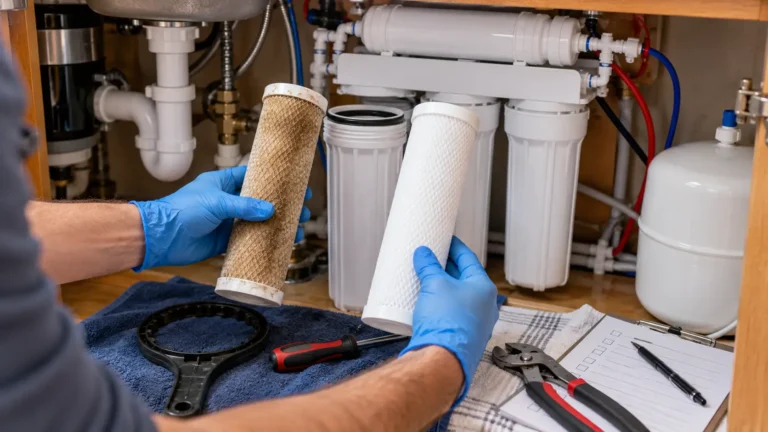
Other technologies serve different purposes. Sediment filters capture particles, while activated carbon filters can reduce certain compounds that affect taste and odor. Reverse osmosis systems are designed to reduce many dissolved substances in drinking water, depending on the system’s configuration and performance.
The right choice depends on the actual water conditions and what you want to improve. A drinking-water concern may require a different approach from scale affecting a water heater. Sometimes, one treatment method is enough; in other cases, a combination may be appropriate.
Before purchasing equipment, ask about installation requirements, ongoing maintenance, replacement parts, and operating costs. A properly sized system with realistic performance claims is usually a better investment than an expensive device selected simply because it promises to do everything.
Simple Habits That Make a Difference
You don’t need an elaborate maintenance routine to keep water-related problems under control. Small habits can help prevent deposits from becoming a constant frustration.
Wipe wet faucets and shower doors when practical, descale kettles according to their manufacturer’s instructions, and check dishwasher settings if spots keep appearing. Replace filters on schedule and monitor treatment equipment for leaks, unusual sounds, or changes in performance.
If your home uses a private well, follow local recommendations for regular water testing. A well can contain contaminants that aren’t visible and don’t noticeably change the taste. Hardness testing is useful, but it does not replace testing for other relevant concerns.
Keep service records, too. Knowing when a filter was replaced or a softener was last checked makes future maintenance easier to manage.
A Better Understanding of Your Water
Water problems don’t always announce themselves dramatically. More often, they appear as small inconveniences that gradually become part of everyday life. Recognizing those signs can help you decide whether a simple cleaning routine, professional inspection, or treatment system is the right response.
Start by understanding your water, then choose solutions that address the actual issue. With sensible maintenance and properly selected equipment, you can reduce avoidable deposits, support the performance of household systems, and make daily routines a little less frustrating.
Good water management isn’t about buying the most complicated equipment available. It’s about making informed choices that suit your home, your budget, and the way you use water every day.