Most homeowners don’t think much about their water treatment system when everything is working properly. The water tastes fine, the shower feels comfortable, and there are no strange noises coming from the equipment tucked away in a utility room. Then, one morning, the water pressure drops or white mineral deposits start appearing around the kitchen tap again. Suddenly, that quiet piece of equipment deserves attention.
Like any household system, water treatment equipment needs regular care. Filters become clogged, components wear down, and settings can drift away from what your home actually needs. The good news is that a little routine maintenance can prevent many common problems, protect your investment, and help your system perform reliably for years.
Why Regular Water Treatment Maintenance Matters
Water treatment systems are designed to address specific concerns, such as hard water, sediment, unpleasant tastes, or certain contaminants. But installing the equipment is only part of the job. Its performance depends on how well it’s maintained and whether it continues to suit the water entering your home.
Consider a sediment filter that hasn’t been replaced in months. As particles accumulate, water flow may gradually decrease. A neglected water softener might stop removing hardness effectively, leaving spots on glassware and buildup around fixtures. With drinking-water equipment, overdue servicing can also mean you no longer have confidence that the system is delivering the intended treatment.
Not every issue appears dramatically. Sometimes the first warning is a subtle change in taste, a longer regeneration cycle, or a slight reduction in pressure. Paying attention to these signs can help you deal with a small problem before it turns into a costly repair.
Water Softeners Need More Than an Occasional Check
Hard water is a common frustration in many households. Calcium and magnesium can leave deposits on showerheads, reduce soap lather, and make glassware look cloudy even after washing. A properly functioning water softener helps manage these minerals, but the equipment needs periodic attention.
Professional water softener service & repair can help identify problems such as salt bridges, clogged injector components, incorrect settings, or worn seals. Depending on the unit, routine care may include checking salt levels, inspecting connections, confirming regeneration settings, and ensuring the system is drawing brine correctly.
There are a few simple things homeowners can do themselves. Check the salt level according to the manufacturer’s instructions, and occasionally look inside the brine tank for a hardened layer of salt that may prevent proper operation. Don’t automatically fill the tank to the top, though; follow the recommended procedure for your particular model.
If hard-water symptoms return, resist the urge to change several settings at once. The problem might be related to a blocked component, an incorrect hardness setting, or a change in the incoming water. A technician can test the water and determine what’s actually happening rather than relying on guesswork.
Filters: Small Components That Make a Big Difference
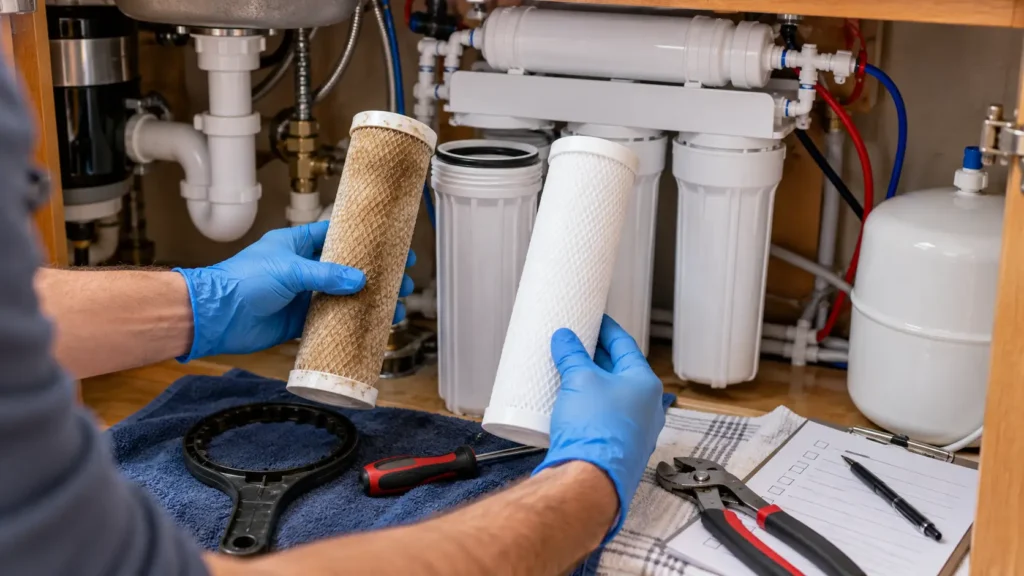
A filter may look like a simple cartridge, but its condition can influence the performance of the entire treatment system. As it captures particles or reduces certain substances, the filter gradually reaches the point where replacement or servicing is necessary.
The correct schedule depends on the type of filter, the amount of water used, and the quality of the incoming supply. A household with heavy sediment may need more frequent replacements than a home with relatively clean water. Manufacturer recommendations provide a starting point, but changes in pressure or water quality may indicate that an earlier inspection is needed.
When replacing a filter, use a compatible cartridge designed for the specific equipment. A cartridge that fits physically isn’t necessarily suitable for the system’s intended purpose. Check the model number, follow the installation instructions, and flush the new cartridge as directed before using the treated water.
It’s also important to understand what a filter can and cannot remove. Sediment filters capture particles, while activated carbon filters can improve taste and reduce certain chemicals. Neither should be assumed to remove every contaminant. If you’re concerned about drinking-water safety, choose equipment based on appropriate testing and verified performance claims.
RO and UV Systems Require Particular Attention
Reverse osmosis (RO) systems and ultraviolet (UV) disinfection units perform different jobs, so their maintenance needs aren’t identical.
RO systems use a semipermeable membrane to reduce many dissolved substances. They typically also have prefilters and may include a postfilter. If the prefilters become clogged, water production can slow and the membrane may be exposed to conditions that shorten its useful life. Membranes themselves need replacement according to their condition, the manufacturer’s guidance, and the characteristics of the incoming water.
UV systems use ultraviolet light to inactivate susceptible microorganisms. Their effectiveness depends on factors such as lamp condition, water clarity, and the unit’s operating specifications. A lamp may continue to glow even when its germicidal output has declined, so appearance alone isn’t a reliable indication of performance.
Consistent ro & uv system maintenance means checking the appropriate components, replacing consumables on schedule, cleaning sleeves where the manufacturer recommends it, and confirming that warning indicators work correctly. UV systems may also need suitable pretreatment because suspended particles can interfere with disinfection.
If your RO or UV equipment is intended to address a specific drinking-water concern, follow the manufacturer’s testing and servicing recommendations. Where appropriate, water testing can help confirm that the treatment arrangement continues to meet its intended purpose.
Should You Handle Maintenance Yourself or Call a Technician?
Some tasks are straightforward enough for homeowners. Replacing a cartridge, checking for visible leaks, keeping an eye on salt levels, and recording service dates are generally manageable when the manufacturer’s instructions allow them.
Other work calls for professional help. Electrical faults, persistent pressure problems, unusual regeneration behavior, damaged plumbing connections, and suspected treatment failures shouldn’t be ignored. The same applies when water develops a sudden unusual odor, color, or taste. Stop relying on assumptions and investigate the cause; if contamination is suspected, use a safe alternative drinking-water source until the issue is assessed.
A technician can also check things that aren’t obvious during everyday use, including internal wear, incorrect programming, pressure limitations, and whether the equipment remains appropriately sized for the household.
Before arranging a service visit, write down what you’ve noticed. Has the water flow changed? Is the issue limited to one tap or present throughout the house? Did it begin after a filter replacement or a plumbing repair? These details can make troubleshooting quicker and more accurate.
The Value of a Planned Maintenance Schedule
It’s surprisingly easy to forget when a filter was last changed or when a softener was serviced. That’s why maintenance plans can be useful, particularly for households with several treatment devices or systems that serve an important drinking-water function.
A maintenance plan may include scheduled inspections, filter replacements, equipment checks, and reminders for testing. Some service providers offer bundled visits, which can make routine care easier to organize. Before signing up, find out exactly what’s included, which parts cost extra, and whether emergency repairs are covered.
You don’t necessarily need a paid plan for every home. A calendar reminder and a folder containing service records may be enough for a simpler setup. What matters is having a reliable routine instead of waiting for something to fail.
Keep track of installation dates, replacement parts, water test results, and any changes in system settings. This history helps you recognize recurring problems and gives technicians useful information during future visits.
Better Maintenance Means Greater Peace of Mind
A water treatment system shouldn’t demand constant attention, but it shouldn’t be forgotten either. Regular checks, timely filter changes, and professional servicing when needed can help protect equipment and maintain consistent performance.
Start by following the manufacturer’s recommendations and learning the warning signs associated with your particular system. Don’t overlook changes in water quality, and arrange appropriate testing whenever there’s a genuine concern about safety or treatment effectiveness.
Most importantly, treat maintenance as part of owning the system, not an extra task to consider after a problem appears. A little attention now can save money, reduce frustration, and help your household enjoy dependable water every day.